
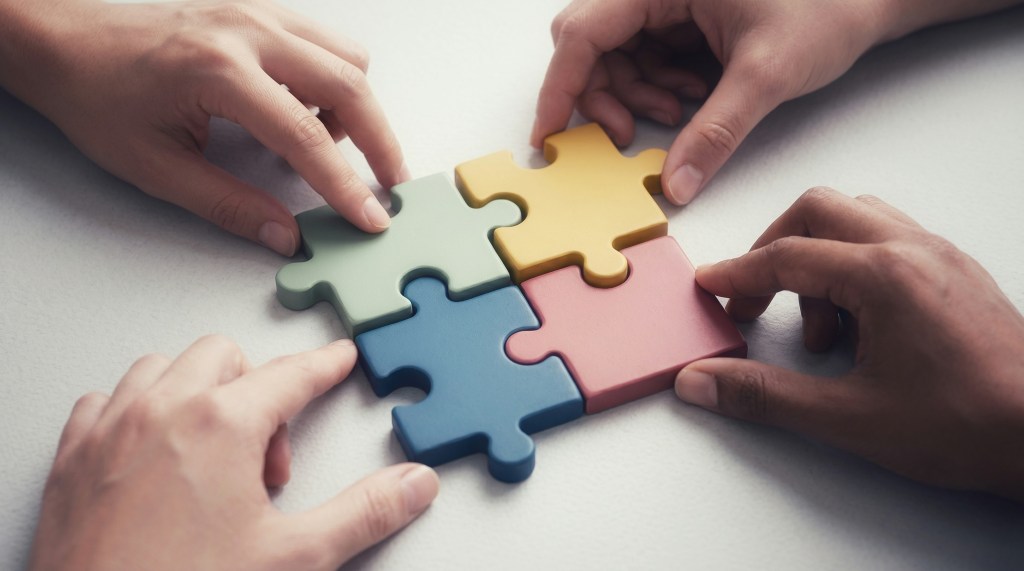
A customer reached out to our support team about an issue that had already passed through two Happiness Engineers (HEs) before it reached a third. By the time the third HE replied, the customer had never once had to repeat themselves, and they already had the next steps to resolve their request. This is a workflow we take pride in, and it’s a workflow that’s almost invisible when it’s successful.
Our support team at WordPress.com has regular, internal discussions about “owning conversations” with our customers, which typically means each Happiness Engineer is equipped to assist customers from the start of their request to a full resolution. However, the reality is that this effort is often completed in a collective format, and a single conversation often belongs to several HEs during the entire correspondence. One HE starts the conversation during their morning shift; another HE may respond when the customer replies at midnight; and another HE specialist might be involved somewhere in between to help with the trickier parts of the issue, until it’s resolved.
Making this internal process feel like one seamless conversation to the customer, rather than a relay race with baton passes between each new reply, is a craft our support team has been refining over several years. We don’t always get it right, though. A customer still has to repeat a detail now and then, and some handovers land bumpier than we’d like. The workflow below is the bar which we hold ourselves to, and the habits that help us hit it more and more often, and this entire process is more about constantly iterating on what works and trimming what doesn’t. Here’s a glimpse at the way we empower each Happiness Engineer to practice this craft.
Drafting notes for a smooth handover
Whether or not a customer remains with the same Happiness Engineer during their request, every conversation with our customers will have an internal note attached to it. HEs use Zendesk as our primary support tool, and we’re well-practiced in reviewing and drafting notes to keep the conversation as clear as possible. And when a handover is necessary, the quality of these notes aid in the quality of the transfer process.
Some notes are automatically triggered by our workflows in Zendesk as a conversation progresses. They may highlight important information about a user’s website, such as the associated domain and subscriptions, and a short summary of the initial request. These automated notes are helpful, but usually aren’t enough on their own when we need to transfer the request to another colleague, which typically happens at the end of our individual shifts.
When transferring a request, our goal is to make the handover process easy for the next HE to continue as seamlessly as possible. We consider what our colleagues would need to continue the conversation, but we also remind ourselves to consider our own perspective: if the roles were reversed, and if the same chat was transferred to us, “what would I need to continue this chat?”
- What do I understand from the scope of this user’s request?
- What context, links, screenshots, and other details have I already gathered?
- What information have I confirmed, and what needs more review?
- What processes have I and the customer already tried (and what worked or failed)?
- What is the immediate next step I’d take to assist our customer?
A well-crafted transfer note saves the next HE from having to reread the entire conversation, and it also saves the customer from having to start over and repeat their request with a new person. With that said, we consider transfers a necessary tool for handing off work between shifts, not a reflex for shuffling customers around.
Consulting the expertise of our guilds
Many conversations don’t require internal escalation and can be resolved between the customer and a few HEs. But when there’s a reason to investigate an issue further, our support team will escalate these matters to specific guilds to handle the request.
Guilds are a small collection of HEs who serve as designated experts with a deeper knowledge about their given area of focus. These areas of focus include Domains, Emails, Payments, Account and Recovery, and Product Experience, just to name a few.
HEs can apply to join one or more guilds, where they’ll acquire their knowledge through both training and experience over time. Guild HEs will assist other HEs with reviewing and troubleshooting any extended support conversations. We can notify guilds to review a request using pings in Slack, or by using routing macros in Zendesk, all while keeping the same support correspondence with our customers and reducing wait times in the queue.
Additionally, each guild keeps a collective pulse on patterns, updates, and errors that affect their area of expertise. In the event of any widespread changes, guilds can help inform the entire division of what to keep an eye out for when assisting customers.
Using AI assistance in tandem with human connection
Our support team uses AI intentionally, as additional tools to assist with tracking our responses and streamlining our progress. While these tools can help summarize longer conversations, diagnose site issues, and draft quick, internal notes, we constantly remind ourselves not to be complacent with the generated output, nor treat it as a singular source of truth.
When customers reach out to human support, we deliver on this obligation to provide our individual judgment, attention, and empathy. No two support conversations will follow the same formula that an LLM can resolve with predictive text, and HEs understand not to rely on this to carry a conversation with another person. This is why our best replies and transfer notes are ultimately crafted by humans, because HEs are well-attuned to the nuances of what a customer is truly asking.
Where AI-tools hold their best value is in streamlining basic automations and complex support queries, which help reduce our time to resolution with our customers. Targeted practice with AI tools can surface behavioral patterns from a website; pinpoint gaps or discrepancies in our platform features; and reference well-documented resources for previously difficult or niche cases. This conscious effort to work alongside AI, and not fully rely on it, is what aids our team to efficiently help our customers in the moment.
Hiring the right people for the role
Our processes and tools for collaboration only work smoothly because of the people we work with. Our best practices take training and experience for each HE to master – but even then, because the first part of our Automattic Creed is to “never stop learning,” our training remains continuous. However, the innate drive to be accountable for ourselves and invested in others’ successes can be harder to teach, so hiring the right people from the start becomes a core component to our company strategy.
A support model where several conversations can comfortably transfer between multiple HEs is more successful when each HE holds similar qualities and values to do their best work. Beyond wanting to resolve a customer’s request, we also want to foster care for our colleagues who may handle our transferred chat. By leaving a conversation in a better state than it started, each side is set up for success. This continuous reinforcement between HEs allows our entire team to continue meeting the needs of our customers and finding perfect resolutions on our platform.


Leave a Reply