

Our customer satisfaction rate in WooCommerce has changed quite a bit over the last few years. We went from around 65% to now consistently landing in the mid-to-high 80%.
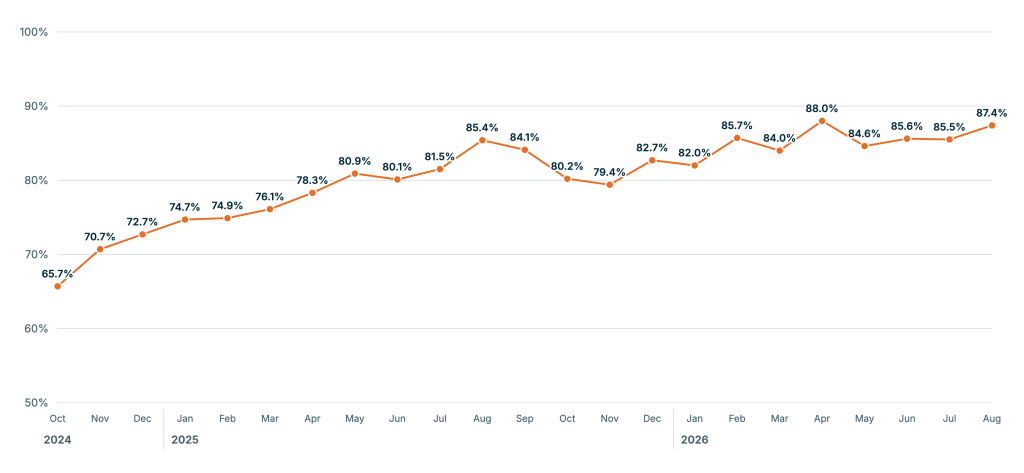
There wasn’t one big thing that got us here. It’s been a Woo Happiness-wide effort, with a lot happening behind the scenes to better understand what our customers are telling us when they leave a rating, especially a negative one.
Finding the friction point
Woo’s Quality Feedback Guild, a group of Happiness Engineers across multiple teams, reviews every piece of feedback we receive. We read over each interaction to find out what the point of friction was for the customer. At what point did this experience turn sour for them? Was it the way we delivered our reply, a disappointing answer, a product gap, or an expectation we couldn’t meet, no matter what we did? Curiosity is what helps us understand what went wrong, and what opportunities we might have missed.
Positive feedback is viewed with the same lens: at which point in the conversation did the customer start feeling like we were on the same team? What did the HE do or say to lead them there, and how can we do more of that?
Closing the loop with the customer
We also follow up to let customers know we heard what they had to say, and that we appreciate them taking the time to share it. If an issue is still unresolved when the rating comes in, that follow-up gives us another chance to help find a solution.
After getting stuck in support loops with another company, and no way to actually talk to someone, one customer responded to our follow-up with:
“I cannot tell you how much I appreciate a personal follow-up.”
It’s a good reminder that closing the loop matters, even when we can’t change what happened in the first place.
From one rating to a pattern we can target
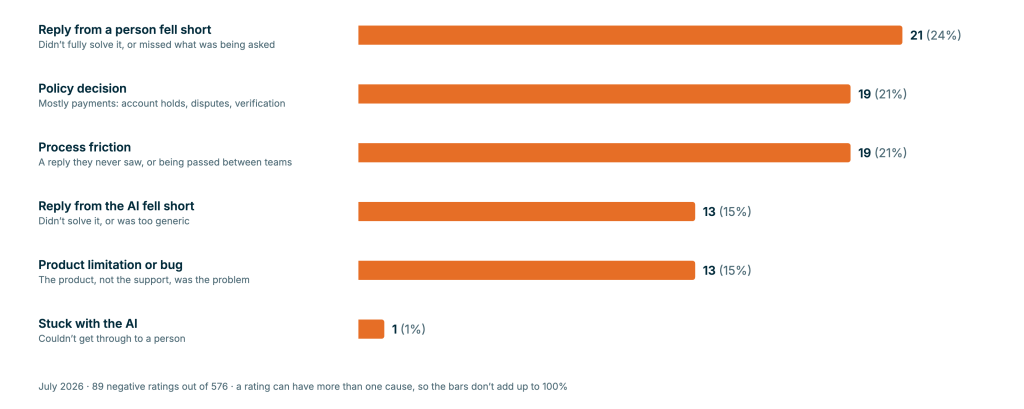
To help us with our workflow, we built an AI agent called CSAT Sidekick. It now handles categorization and review work, while a human makes sure the agent is accurate and doesn’t miss nuance.
That helps us figure out what to do with it, and who needs to see it for us to close the loop. With all the feedback analyzed in one place, we can zoom out and see the patterns, which inform our focus.
For example, we saw well over 30 negative ratings each month tied to friction with AI replies and the AI-driven support flow. We then flagged these patterns to our AI team working on that experience, and for five months running now, numbers have stayed below 20. One of the changes we’ve made, for example, is that we redesigned the email to make it clearer that the only thing you need to do if you’re not happy with the AI-generated answer is reply to that email.
Before:

After:

The efficiency we’ve gained with the help of agents like CSAT Sidekick means less of our time goes into sorting and tagging. Our connection to the customer stays front and center. Every follow-up is sent by a human, and what’s freed up goes toward acting on what a customer told us.
We’re proud of how far we have come because it’s allowed us to build a better customer experience. We’ve built a habit of curiosity about the customer perspective. What else can we learn when we treat a rating as the beginning of a conversation?

 Happiness Everywhere
Leave a comment