Category: Life in Happiness

The people behind the answers: days in the life, meetups, and what it’s like to do this work at Automattic.

  • Meet Shohan: A Day in the Life of a Happiness Engineer

    Meet Shohan: A Day in the Life of a Happiness Engineer

    Shohan is a Happiness Engineer at Automattic, and in this video he explains what the job really looks like day to day.

    He spends most of his time with WooCommerce merchants, fixing issues, explaining features, and helping keep their stores online. For a lot of these merchants, the store is their livelihood, so a quick fix can mean real relief.

    Shohan says the best part of the job is the mix of technical work and human connection. No two days look the same, and there’s always something new to learn or test.

    He also talks about what it’s like to work at Automattic: a fully distributed team spread across the world, with a culture built on curiosity, support, and sharing what you know.

  • Ed Thomas on Fixing Bugs, Learning AI, and Never Getting Bored

    Ed Thomas on Fixing Bugs, Learning AI, and Never Getting Bored

    Meet Ed Thomas, who leads one of the Escalated Support teams for WordPress.com. Ed’s team handles site migrations, cleans up hacked sites, and fixes bugs across the platform, work that changes every day and never lets him get bored. He talks about how AI has become a genuine learning partner in his job, helping him understand code in a way he never could on his own, and why he sees the work as a marathon, not a sprint.

  • The greatest job title I’ll ever have

    The greatest job title I’ll ever have

    At Automattic, we have a Creed. This is the fourth line:

    I will build our business sustainably through passionate and loyal customers.

    Customers are central to everything we do. The Happiness Engineer title aims to capture how seriously we take that work. In 2007, when Matt Mullenweg posted Automattic’s first Happiness Engineer job listing, he described the role like this:

    We consider the support side of the user experience to be vitally important because it is the person who interacts with our customers most and makes the biggest impression in their time of need.

    At the time, Matt paid close attention to Tony Hsieh of Zappos, where customer happiness wasn’t merely a metric, it was the whole business. Matt wasn’t going to call it Support. We focus on outcomes at Automattic, and the outcome he wanted was happiness. 

    Meanwhile, Automattic at that time was mostly engineers. Matt wanted every person at Automattic on equal footing. When he posted that first job listing for a Happiness Engineer, he did not mean engineer in the sense of code and credentials. He meant engineer in the deepest sense of the word: someone who does not just solve problems but asks whether the problem needed to exist in the first place. The best engineers are not the ones who answer the most tickets. They are the ones who build the solution that means the ticket never gets created again. Helping a small business owner resolve their site’s issue at 2:00 A.M. is as important as writing the code that powers it.

    Minutes after the first job listing went live, a colleague wrote back: “Happiness Engineer. I like that.”

    Nearly two decades later, so does everyone else. For me, it’s the greatest job title I’ll ever have. It’s aspirational. It inspires me to engineer happiness for the people I serve, whether those people are customers, team members, peers, or other Automatticians. Happiness Engineers debug, investigate, and advocate for customers. They often know more about how our products work in the real world than anyone else in the company.

  • Preparing for the Happiness Engineer Role

    Preparing for the Happiness Engineer Role

    If you’ve been thinking about applying to be a Happiness Engineer but aren’t sure yet whether you’re ready, this guide will help you prepare to apply. There’s no guarantee that doing these things will result in you being hired, but many of our strongest candidates have prepared in some of these ways before applying.

    Build Real WordPress Experience

    The most valuable thing you can do is use WordPress. A lot.

    • Set up your own site (or several!). WordPress.com lets you create a site for free. Build something real. Break things and fix them. Try different themes. Install plugins. Experiment with the block editor.
    • Try WooCommerce. Even setting up a test store and walking through the setup process will teach you a ton about how online stores work on WordPress.
    • Troubleshoot on purpose. When something doesn’t work as expected, resist the urge to just search for the answer and move on. Dig in. Look at what’s happening. Try to understand what the root cause of an issue is rather than looking for a simple fix of a symptom. That troubleshooting instinct is exactly what we’re looking for.

    Get Into the WordPress Community

    • Volunteer in the WordPress.com forums. Start helping other users with their questions. This is essentially practice for the HE role and is a way to showcase some relevant support work. You’ll build WordPress knowledge, develop your support communication skills, and show genuine initiative. If you do this, mention it in your application and link to your profile.
    • Attend a WordCamp or WordPress meetup. These are community events where you can connect with other WordPress users, learn from talks and workshops, and immerse yourself in the ecosystem. They’re affordable, welcoming, and a great way to deepen your involvement. You might even find us at a career booth. Come say hello!
    • Follow WordPress development and news. Read the WordPress.com blog, follow WooCommerce updates, and stay current with what’s happening in the ecosystem.

    Build Your Support Skills

    If you don’t have customer support experience yet, find ways to start.

    • Freelance or volunteer. Help people with their websites. Offer to troubleshoot for friends or local businesses. Any experience where you’re solving someone else’s technical problem through clear communication counts.
    • Practice writing support responses. Find real questions in the WordPress forums and draft responses, even if you don’t post them. Focus on being clear, warm, and thorough without being overwhelming.

    Develop Your AI Skills

    This is newer territory, and it’s increasingly important.

    • Go beyond prompting. If you’ve only used AI to ask questions and get answers, start experimenting with building something. Automate a repetitive task. Create a workflow. Build a tool that solves a real problem.
    • Try building with AI coding tools. Tools like Claude Code, GitHub Copilot, or Cursor let you build things even if you’re not a traditional developer. Try shipping a project: a browser extension, a script that automates part of your workflow, a custom tool for something you do regularly.
    • Use AI in your WordPress learning. As you’re building sites and troubleshooting, practice using AI as a research partner. Ask it to explain concepts, then verify by testing. Build the habit of understanding what AI tells you, not just accepting it.
    • Document what you build. When you apply, you’ll want specific examples. Keep track of the workflows, tools, or processes you’ve created with AI and what impact they had.

    Develop Your Technical Foundation

    You don’t need to be a developer, but a solid technical foundation goes a long way.

    • HTML & CSS basics: MDN Web Docs and freeCodeCamp are excellent free resources.
    • Domains & DNS: Cloudflare’s Learning Center explains how the internet works in approachable terms.
    • SEO fundamentals: Many customers want to grow their audience. Understanding the basics of how search engines work makes you more helpful.
    • eCommerce concepts: If you haven’t run or helped run an online store, even a small test shop will give you useful context.

    Resources to Help You Level Up

    WordPress Skills

    HTML & CSS

    Domains & DNS

    AI Tools & Learning

    • Claude Code – Build projects and automate tasks with AI assistance.
    • GitHub Copilot – AI-powered coding that helps you build tools and workflows.
    • Cursor – An AI-first code editor, great for learning to build with AI even if you’re not a developer.
    • Prompt Engineering Guide – Learn how to get better results from AI tools.
    • Zapier and Make – Build automations and workflows without writing code.

    Customer Service Skills

    Get to Know Automattic

  • 24 Hours a Day: Ramona’s Day on the Customer Growth Team

    24 Hours a Day: Ramona’s Day on the Customer Growth Team

    Ever wondered what it’s really like to be a Happiness Engineer at Automattic?

    Ramona, a Happiness Engineer on the Customer Growth Team within WooCommerce, takes us through a typical workday in Happiness. As part of a fully distributed company, Ramona works from her home office, connecting with WooCommerce merchants around the world.

    In this video, Ramona shares what makes her role special: regular video calls with merchants to understand their businesses and support their growth. She walks us through her daily routine, from documenting merchant conversations to keep her team aligned, to collaborating on strategies that help stores increase revenue and solve technical challenges. These one-on-one conversations with merchants are what Ramona loves most about her work.

    You’ll also see how Automattic’s commitment to flexible work plays out in real life, whether that means taking breaks to play with her cats or connecting with teammates through Slack channels dedicated to both hard work and fun.

    Whether you’re curious about the customer-facing side of Happiness Engineering, considering applying to join our team, or simply want to see the authentic human side of what we do, Ramona’s video offers a genuine look at life on the Customer Growth Team.

    Interested in learning more about the Happiness Engineer role? Check out our other blog posts or visit our Work With Us page to see current openings.

  • Happiness Team Meetups: Where Work From Anywhere Meets the World

    Happiness Team Meetups: Where Work From Anywhere Meets the World

    At Automattic, we’ve built something special: a company where you can work from anywhere in the world. But here’s what makes it even better: we bring our teams together to explore that world, too.

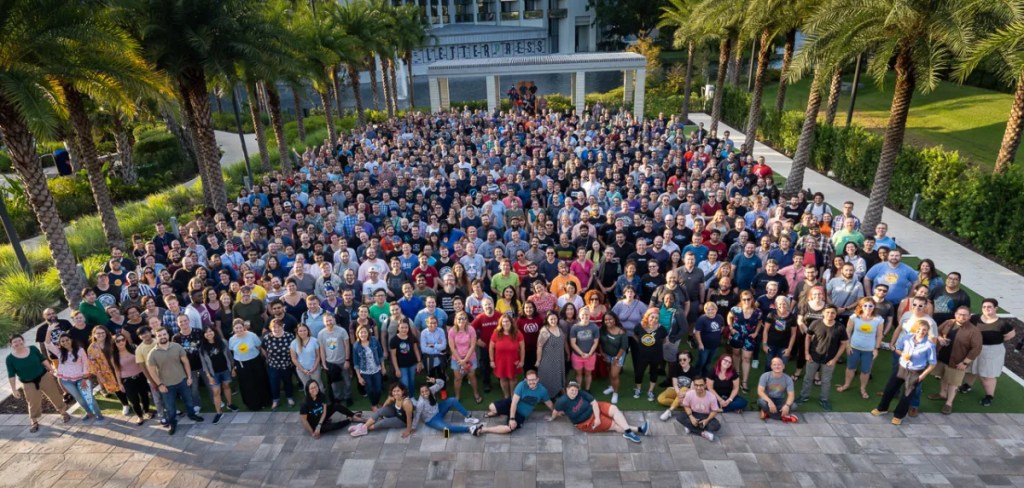
    For Happiness Engineers, team meetups are an awesome perk of the job. Once or twice per year, teams head to incredible locations around the globe for five to seven days of collaboration, learning, and connection. Past meetups have taken teams to Seoul, Lisbon, New York, Tokyo, Edinburgh, and countless other cities where teammates can work together and experience new places.

    Why We Meetup

    Working remotely gives you incredible flexibility and autonomy. You get to choose where you live, how you structure your day, and what your workspace looks like. But face-to-face time is crucial for building the kind of relationships that make distributed work truly successful.

    When you’re solving problems together in person, discussing support strategies over coffee, or sharing productivity tips between sessions, you build connections that carry you through the other 51 weeks of the year. It becomes so much easier to understand the nuance in a Slack message when you’ve explored a new city together or shared meals with your teammates.

    What Happens at Meetups

    Team meetups blend work and exploration. You might spend mornings discussing best support practices, advanced troubleshooting techniques, or planning your team’s quarterly goals. Afternoons could involve collaborative projects, skill-building sessions, or working your regular shift while sitting next to colleagues you usually only see through video calls.

    But it’s not all work. Teams build in time to explore their host city, whether that’s visiting museums, trying local restaurants, or taking day trips to nearby attractions. The combination creates memories that strengthen team bonds and remind you why the distributed model works so well.

    Work From Anywhere, Meet Up Everywhere

    Team meetups show what’s possible when you embrace distributed work without losing human connection. The flexibility to work from your chosen location combined with the chance to collaborate in person creates the best of both worlds. You build a career that fits your life while forming genuine connections with colleagues across the globe.

  • Want to Be a Happiness Engineer at Automattic? 

    Want to Be a Happiness Engineer at Automattic? 

    Looking to join Automattic as a Happiness Engineer? This guide is here to help you figure out if this role is right for you and where you might need to grow in order to fill the role. Whether you’re just starting to explore the idea or you’ve applied before and want to come back stronger, you’ll find practical advice here.

    This post has been updated i. W learned a lot sinceabout what sets successful Happiness Engineers apart, and want to share that with you.

    What is a Happiness Engineer?

    Happiness Engineers (HEs) are the people who create amazing experiences for our customers across WordPress.com, WooCommerce, and our other products. On any given day, a Happiness Engineer might troubleshoot a tricky technical issue over live chat, walk a first-time blogger through setting up their site by email, or help a store owner figure out why their checkout isn’t working.

    But it’s more than answering questions. Happiness Engineers proactively solve problems, recommend solutions customers hadn’t thought to ask for, and build genuine connections that help people succeed. They also feed valuable insights back to our product teams, making everything we build better for the people who use it.

    This is the kind of work where every day is a little different. It’s challenging, it’s rewarding, and it requires a specific combination of skills and motivations to do well.

    What Actually Matters

    We’ve looked closely at what distinguishes our most successful hires, and certain things come up again and again. Here’s what we’re looking for:

    1. Real WordPress Experience

    The candidates who do best in this role already know their way around WordPress because they’ve been using it, building with it, troubleshooting it, or supporting other people who use it.

    That experience shows up in how you talk about WordPress. You can describe specific problems you’ve solved. You’ve done setup and troubleshooting for both themes and plugins. You’ve dealt with DNS issues or helped someone figure out why their site looks different on mobile. You’ve dug into settings and have a sense for where to dig further to resolve issues.

    If your WordPress knowledge is mostly surface-level right now, that’s okay, but you may need to deepen it before applying. It’s possible to deepen that knowledge fairly quickly, and our guide to positioning yourself for the HE role may help you.

    2. Customer-First Motivation

    The people who thrive in this role genuinely love helping customers. They can describe what they find satisfying about support work. They light up when they talk about solving a customer’s problem or watching someone go from confused to confident.

    Candidates who are primarily motivated by wanting remote work, a career change, or joining Automattic as a company (rather than doing this specific work) tend to struggle. The day-to-day reality of support is demanding, and the people who thrive here find genuine satisfaction in the customer interactions themselves.

    So ask yourself honestly: is it the work that excites you, or the lifestyle? Both are valid reasons to be interested, but we strive to hire people who are excited about the customer support work itself.

    3. Problem-Solving Through Curiosity

    Great Happiness Engineers don’t just fix the immediate issue. They want to understand why it happened and what the customer is actually trying to accomplish. When someone asks “How do I add a button to my page?”, the best HEs, rather than just sharing how to add a button, naturally wonder “What is this button meant to do?” That deeper curiosity leads to better solutions.

    We’re looking for people who treat problems like puzzles. You explore, you test, you investigate. When you don’t know the answer, you’re energized by the challenge of finding it, not frustrated by not knowing.

    4. Clear, Human Communication

    Happiness Engineers work with colleagues and customers from various time zones and cultures, with different levels of technical expertise. Your ability to explain complex things simply, with warmth and personality, is crucial. Our goal is to show customers that we really understand what they’re trying to do with their sites.

    That means that our communication must be clear, empathetic, and tailored to the customer’s situation and level of experience. A developer debugging custom code needs a different conversation than a small business owner setting up their first online store.

    5. Self-Direction and Independence

    We’re a fully distributed company. You schedule your own hours, manage your own workload, and make your own decisions about how to spend your time.

    Successful HEs are naturally self-motivated. They meet deadlines without reminders, seek out answers before asking for help, and stay productive without external structure. If you’ve always worked best with a high degree of supervision or oversight, this role might be a stretch. If you’ve thrived in independent environments and love owning your work, you’ll feel right at home.

    6. Adaptability and a Learner’s Mindset

    WordPress and our products are always evolving. What you learn today might change next month. The best HEs treat learning as an ongoing part of the job, not something that ends after onboarding. They stay curious, keep up with changes, and actually enjoy the process of continuously developing their skills.

    A Closer Look at WordPress Knowledge

    I want to spend a little more time here because it’s probably the single most important thing you can invest in.

    What “WordPress experience” means to us:

    • You’ve built and maintained WordPress sites (not just one, ideally several)
    • You can navigate the WordPress’s dashboard and key features (such as the block editor) confidently
    • You understand themes, plugins, widgets, and how they interact
    • You’ve done some troubleshooting: broken sites, plugin conflicts, display issues
    • You have at least a basic understanding of HTML and CSS (enough to look at source code and understand what you’re seeing)
    • You’re familiar with domains, DNS, and how sites connect to the internet
    • Bonus: You’ve worked with WooCommerce, set up an online store, or supported eCommerce customers

    Candidates with years of practical WordPress work, whether from an agency, freelance practice, hosting company, or volunteer support work, consistently do well. If friends and colleagues come to you with WordPress questions, that’s a meaningful signal.

    You don’t need to have all the answers. But you do need enough of a foundation to learn quickly and troubleshoot effectively from day one. Specifics matter: tell us about real problems you’ve solved, not general concepts you’ve studied.

    If you’ve merely tinkered with a test site or two, it’s unlikely that your skills are sufficiently developed yet.

    Working With AI

    AI is part of how we work at Automattic, and we expect Happiness Engineers to be fluent in it.

    This goes beyond asking an AI tool a question and pasting the answer. We’re looking for people who have moved past basic prompting and into using AI to create real value. That might look like:

    • Building workflows or automations that save you (or your team) time
    • Shipping a project using tools like Claude Code or similar
    • Designing processes around AI that make a team more effective
    • Creating custom tools, templates, or systems that use AI in meaningful ways
    • Using AI to learn new skills faster, then applying what you’ve learned independently

    If you’ve done something like this, whether for yourself, for a client, or for a team, tell us about it. Be specific. What did you build? What problem did it solve? What did you learn?

    Ready to Make People Happy?

    The journey to becoming a Happiness Engineer is unique for everyone based on their own experiences, but the common thread is genuine WordPress knowledge, a real love for customer support, and the curiosity and self-direction to keep growing.

    If you think you’d be a great fit for our team, we’d love to hear from you. Check out our Happiness Engineer openings and submit your application. If you’re not sure yet whether you’re ready or not, look through our post on positioning yourself to become an HE

  • My day-to-day life as a Woo Happiness Engineer

    My day-to-day life as a Woo Happiness Engineer

    When you become a Woo Happiness Engineer, you embark on a journey filled with unique and fulfilling experiences. Each day brings something new and exciting. Allow me to walk you through what I do and a bit of what I’ve done already to give you a glimpse into this role.

    Typical day

    My morning starts with checking my email and Slack to see what I need to know, act on, or respond to, and then I prioritize all these. 

    After organizing my tasks, I refer to my flexible four-day workweek schedule. I am one of a few HEs with this preference. I work 10 hours a day, four days a week. This schedule allows me to savor a refreshing three-day weekend. I usually break my day into two halves with a 1-hour lunch break, during which I often indulge in a power nap to recharge!

    What do I work on?

    Direct Support Work

    Since the Woo ecosystem is so diverse, Woo HEs can choose a specific area of direct support to work in. I chose to specialize in Payments-related issues. This means I spend my day sorting out payment queries and ensuring that money flows smoothly to merchants using our payment extensions. When I come across issues that are particularly challenging, I turn to Slack for support from other HEs or consult with our developers. This specialization area is crucial as we want to ensure that all ecommerce sites process payments properly. The satisfaction of resolving any issues is a key part of what makes this role so rewarding.

    Citizenship Time

    Since I work four days a week, I get 2.5hrs of citizenship time per day. I use this time to catch up with items I prioritized that morning, catch up with posts, support colleagues on Slack, undertake further training, attend meetings and do other indirect support tasks like guild work or projects. Speaking of guilds, what are they? 

    Guilds

    Guilds comprise a small group of HEs working together to tackle or improve a specific area of support. For a while, I was part of the Testing Guild, where I helped developers test calls for pre-release versions of our products to see if all worked as expected before going public. I also worked through the backlog of bugs for our different extensions by testing, updating the bug reports, and closing those that were no longer relevant. Later, I became a WooCommerce core Product Ambassador on a call basis. That means I get to see some pre-release WooCommerce features and work on documenting anything that is not documented before they go live!

    Projects

    I’m usually happy to jump into projects as they come up, as they offer new challenges, learning opportunities, and time to meet other folks at Automattic. I recently got entrusted with a rather significant project to work with Automatticians in different divisions to see how we HEs in Woo Happiness could help collaborate with agencies, developers, and hosts that have WooCommerce as part of their offering! Next, I’ll work on implementing some of the outcomes of this project. Another project I’ve participated in was making documentation videos for our products to make it easier for users to jump straight into using them.

    Training

    At Automattic, we value continuous learning and growth. There are numerous training opportunities available, and I’ve taken advantage of some of them to build up my skills. Recently, I completed a two-month leadership training program and a two-month on-camera speaking course. I plan to take a few more courses this year. 

    Other Work

    There’s usually some other work that you can apply for while you’re still a HE. For instance, I was previously a Woo Happiness Mentor (Division Onboarder) on a 6-month tenure. Woo Happiness Mentors onboard new Woo HEs, walking with them from their first day until they learn the ropes and are impactful, full-standing HEs. It’s an incredible experience to walk this journey with them.

    Apart from this, I volunteer a lot for WordCamps. Automattic is usually a Global Gold-Level Sponsor for WordCamps. So far, I’ve volunteered to staff our WordPress.com and Woo booths at WordCamps in Africa and Europe. From this work, I’ve met many people from all over the world who are passionate about WordPress.   

    The HE role entails a lot more than what I’ve covered here, and the fun part is that you get to choose your adventure based on the impact you want to make!

  • Life as a Woo Happiness Engineer

    Life as a Woo Happiness Engineer

    It’s a remarkable journey, transitioning from reader to writer, from aspiring Happiness Engineer to a seasoned Automattician. I vividly recall the aspirations and dreams you might also be holding right now—the desire to work for Automattic and to be a part of this incredible company; I knew I could excel, that my life would be enriched and that I would be doing something I deeply understood and loved.

    The Beginning:

    When I embarked on my journey to become an Automattician, my research was relentless – I was determined to be fully prepared. Despite my 7 years of WordPress experience, I understood the importance of taking the job application and preparation process seriously, knowing that it was crucial for the hiring team to consider me.

    Here’s what I did:

    • Read previous HE stories. There, I learned how many applications it took HEs before me and what the hiring team advised if they weren’t immediately accepted. For example, volunteering in the WordPress.com forums is strongly encouraged to broaden your knowledge and underst­anding of how to support WordPress users. I browsed the forums obsessively before I applied.
    • I revisited the job listing, evaluated the requirements, identified my strengths and weaknesses, and created a plan to improve.
    • I visited Glassdoor and browsed all other Automattic-related resources I could get my hands on to keep myself motivated about what I was working towards.

    Eventually, after three months of preparation (way too long 😅), I applied, was accepted into the trial, and passed!

    Life as an HE

    Since then, I’ve gone through several changes, and I would love to share a behind-the-scenes look at the life of a Happiness Engineer at Automattic.

    As a new Happiness Engineer, my role was primarily focused on support work for WooCommerce. This included testing for issues reported by users, creating bug reports as needed, providing standard plugin support, and interacting with different teams and vendors in the WooCommerce marketplace. This was my main task for 6 hours of the day, while the remaining 2 hours were dedicated to what we call ‘citizenship tasks. ‘

    Citizenship tasks typically include reading internal blog posts that we call P2s, posting weekly updates, working on peer reviews, sharing knowledge with peers, completing a course that will help with your role and more.

    As time passed, things slowly began to evolve, and it became evident that this was the goal all along. To become an HE that embodies the Automattic creed.

    After about nine months, there was a call for interest post that appealed to me. These posts are exciting and allow HEs to increase their impact and contributions to the company in different ways. This call for interest was for new members for the Customer Feedback Guild. Guilds are small teams composed of HEs who work on projects or tasks that are valuable to the company during their citizenship or other allocated time. My guild focused on taking customer feedback and determining the best way to apply it to improve our products or support experience.

    After joining the guild, I started to see and learn something about the Happiness Engineer role that I hadn’t understood initially. Automatic is a breeding ground for fresh ideas and welcomes HEs to actively be involved in the implementation of those ideas. There is also an expectation that HEs will find ways to contribute to existing systems implemented within our support process beyond the actual support itself to keep systems efficient.

    What I thought would just be support became an opportunity to delight users in our daily support interactions and contribute to the company’s broader goals.

    Since then, I’ve done other things, like joining another guild and training new wranglers for my previous guild role. I engaged in knowledge sharing through P2 posts and have had conversations with different teams to learn more about what they do and how I can help. My current guild’s main focus is helping small and medium businesses grow by understanding their unique goals and challenges and offering solutions. We offer target customers the opportunity to talk with us 1:1. These calls are about understanding the customer and providing the best help, so that they can move forward using WooCommerce.

    Onward

    Looking forward, I see a world of opportunities, and I hope you share the same optimism when you join as a Happiness Engineer. The potential for growth and contribution is immense, and I implore you to embrace it with open arms.

    I encourage you to remain curious and courteous and seek new opportun­ities to contribute.

    Who knows, I might one day be working on a team implementing your idea.

  • My Daily Work as a Woo Happiness Engineer…

    My Daily Work as a Woo Happiness Engineer…

    Are you considering joining Automattic as a Happiness Engineer and want to learn more about the work we do and what you can expect? Buckle up, as I’ll give you a hands-on guide of what a typical day looks like for a Happiness Engineer like me.

    What hours do Happiness Engineers work?

    The short answer is: the hours they prefer. I set my own work hours two weeks in advance, allowing me to work when I prefer. My workday consists of 8 hours, but the hours I work are up to me. I could do a typical 9 to 5 schedule. I could do 4 hours in the morning, and 4 in the afternoon. If I wanted, I could take an hour-long break after every two hours of work. It’s really up to me.

    Once my 8-hour workday is set according to my preferences, I’m scheduled for work based on the following:

    • 6 hours of direct support. This is the time I spend helping our customers (also called users) via live chat, async tickets or 1:1 calls. It’s worth noting that ticket blocks have a few hours of flexibility in each direction.
    • 2 hours of citizenship time, during which I spend time learning, catching up on Slack (our virtual office) conversations, and P2s (our internal blog tool), working on projects, and doing guild work.

    Despite the flexibility offered, I prefer having a semi-fixed schedule and typically work between 7 am and 3 pm.  I like to start my day with five consecutive hours of direct support, followed by two hours of citizenship time, and finish up with one hour of direct support, which I prefer to dedicate to ticket time. This ensures that I have enough time to follow up on all my chats from the day.

    Interacting with Customers

    My 6 hours of direct support time each day consists of different amounts of ticket and chat hours, based on my set preferences and the need for coverage. On one day I might do 3 hours of chats and tickets. On another day I might have 4 hours to work on tickets and 2 hours to spend in chat. On another day I might not have any chat hours at all, and spend my 6 hours focusing on tickets. As part of my Guild work, I also have the opportunity to chat with customers 1:1 (I will explain more about this below).

    As a WooCommerce Happiness Engineer, I help our customers (or merchants, as we call them at Woo) ensure their online store performs seamlessly. This means I get to work on fantastic people’s awesome stores and help them sort out their unique challenges every day.

    Working with My Peers

    Automattic is a globally distributed company, meaning everyone works from a different location, including us, Happiness Engineers. However, this does not mean we’re not working together. Slack is our virtual office, and we use it to collaborate and work together. These sessions are great to increase our knowledge and provide effective help to our customers.

    Projects and Guilds

    Each Happiness Engineer is encouraged to join a guild, squad or be part of a project, which gives us a chance to learn and contribute to the work Automattic does in different ways. For example, the Docs Guild helps make sure the documentation on Woo.com is accurate and accessible to all merchants and the Videos Guild creates short videos to explain various features of WooCommerce.

    I’m part of the Customer Growth Guild, where our main focus is helping small and medium businesses grow by understanding their unique goals and challenges and offering solutions. As a result, they can further grow with WooCommerce. Our Customer Growth Guild offers target customers the opportunity to talk with us 1:1. If a customer takes advantage of this opportunity, I would engage in a 30-minute call with them to understand their goals and challenges. These calls are not technical at all – they’re more about understanding the customer, so we (it’s a team effort!) can provide the best help by email.

    Final thoughts

    When you are a Happiness Engineer, no two workdays are the same. Not because of the various hours you spend with ticket or chat support – but because of the variety of merchants you get to work with. Each day has new challenges, keeping the work interesting while letting me work on my skills and learn new things.

    Considering applying? Dive right in! There’s nothing to lose.